Research Task: Paper and Bookbinding
- Christine Griever

- Jan 6
- 8 min read
Further inform your understanding of paper and bookbinding by reading pages 165–180 of Alan Pipes’ chapter ‘ On Press’ available as a downloadable resource at
Collect lots of different paper samples, and assemble these into a standalone book, or integrate them into your sketchbook. See this as the start of an ongoing resource that you can add to, and refer back to. Add notes to your paper sample book/sketchbook identifying the paper source, stock, and any reflection on the paper’s qualities. You may want to extend this investigation by exploring how your paper samples can be folded, combined, stitched, printed on, or bound
together. Explore your samples’ physical properties by working with them, testing them out, and visually documenting the results of your research.
What is paper?
Papermaking originated from natural organic fibres and is one of the oldest printing crafts. The first writing materials were made from a plant that grew along the Nile River, and the word "paper" is derived from Cyperus papyrus, the name of an Egyptian reed. In China, around AD 105, paper was created from vegetable fibres, and prior to that, it was made from pulped silk.
Paper is largely made from cellulose-based plant fibres or other fibres such as wood, straw, cotton, and grass. In South Africa, paper is made from a mixture of cultivated trees, fresh wood fibre or recycled paper products. Sometimes waste from sugar cane can also be added to the paper pulp.
Collecting paper samples
This exercise should have been straightforward. I often think that living in a developing country is a disadvantage when trying to do a degree like this online via the UK. I went to different printers and printing shops, but they were not willing to give samples of paper unless I paid for it. Or they didn't provide samples or swatches of paper. Or I couldn't travel to the places, as it would be unsafe for me to do so. I live in a country where the infrastructure has essentially broken down, and services like the post office don't exist. I looked online in the UK, as I had a friend flying out to SA, I ordered the sample swatches, but it appears the postal system in the UK is also poor and the samples have yet to arrive.
Defeated, I went and paid a lot of money for paper samples in South Africa, much to my annoyance. I arranged some of the samples into my sketchbook and wrote about the properties of the different types of paper.


I found and inserted samples that showed a wide range of different finishes. Many of the papers showcased were suitable for most types of printing such as business cards, manuals, flyers, posters and brochures, etc. There was also a choice of uncoated (which seems to be the most popular and less expensive) matt and coated paper. Depending on what the printing is for, uncoated and matt paper is suitable for books and publishing, but also correlates with the GSM (the higher the GSM, the more expensive the final product).
I found that coated paper was reserved more for illustration and image-rich projects such as coffee table books, photography books and children's books. These books would be more expensive depending on the GSM used, but coated paper is heavier than uncoated paper. A book or project with a large number of pages will be cheaper with a lower GSM.
I also featured papers that could be used for endpapers and book covers. I found many different papers that were embossed and could be used for other printing processes, such as foil stamping. Having these different papers adds luxury to the book covers, as discussed in my earlier exercises, where books can be made as limited editions or collectors' editions by making them more special with embossed and textured paper.
The most interesting find from my samples of paper was the GSM, one sample went up to 850 GSM, which I found impressive. The texture of this weight was incredibly tough to bend, yet it felt luxurious!
It was also good to discover that recyclable papers were among the samples, as I feel that making an effort to make papers more sustainable and recyclable is important when designing and using paper for a project. I was impressed by the quality of recycled paper when I think back to my days at school when recycled paper equalled low quality.
The conclusion is that numerous papers are available to us when deciding to print. The decisions come down to cost and the quality of the paper best suited for your project.
Types of paper
Papers come in different weights called grams per square metre or GSM. The higher the GSM, the heavier the paper. Below are the weights of paper used in publishing books.
25-40 gsm Scritta (Bible paper)
45-55 gsm Newspaper
60- 90 gsm Medium-weight books (Mass market) paperback
100 - 140 gsm Heavier-weight books like photographic books
130 - 170 gsm Children's books with illustrations
Paper Sizes
This really depends on where you are in the world, the standard is ISO 216. However, North America use American National Standards (ANSI) formatting. The ISO 216 uses the √2 aspect ratio, so if you were to fold an A3 paper in half it will make two A4s, if you half an A4 then it will make two A5s.

The B series is used for applications where an A series size is either too small or too large.

The C series is defined by ISO 269, which is mainly used for envelopes.

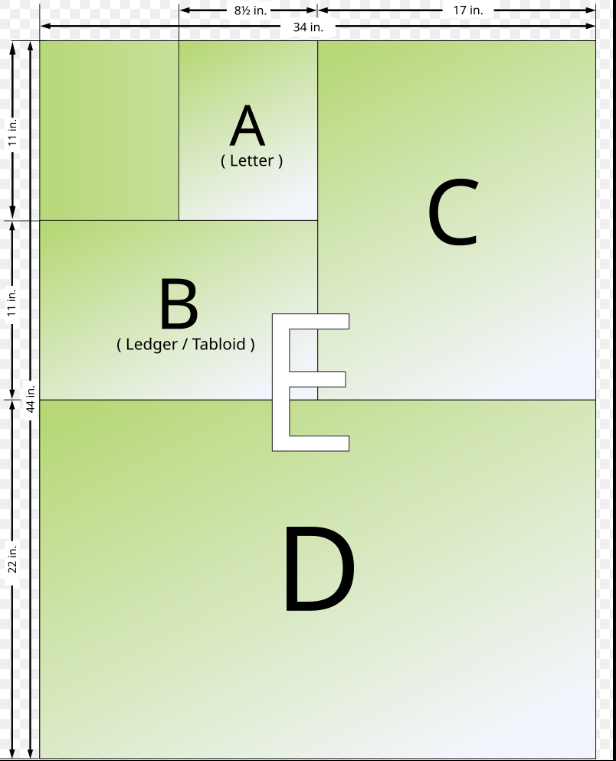
ANSI A is Letter size, while ANSI B is Ledger/Tabloid size.
Binding


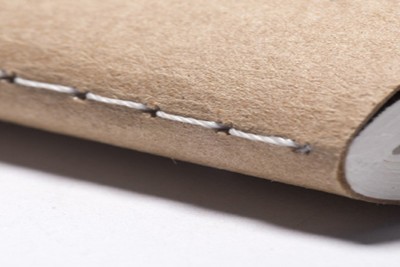
Fig. 5 Tape Bound and Thread Sewn (2024)
Tape bound: Sheets are secured together using a strip of tape or cloth on the outside, side stitching is frequently used to make it stronger. This method has become less common since the widespread use of perfect binding.
Thread sewn: Individual sheets are stitched together by hand on one side using a needle and thread, making various patterns.


Fig. 6 Square, round and PUR binding (2024)
Square or Round Case or book binding: Can be sewn or perfect bound first, then finished with a separately crafted hard or soft cover. This is the most expensive but also the most elegant form of binding.
PUR binding (lay flat): This is the same method as perfect binding, but with PUR (Polyurethane Reactive) glue (holds stronger) and stretch paper for the spine. The spine of the book is not attached to the spine of the cover. This allows a book to lie fully open.


Fig. 7 Spiral, EVA and stitching (2024)
Spiral, wiro and comb binding: Individual sheets are bound together by a continuous spiral of wire or plastic that threads through a row of holes punched along one side of the printed material.
Perfect binding (EVA): folded pages (signatures) are glued together at the spine and a paper cover is wrapped around the whole piece concealing the spine of the book.
Stitching (stapling) is not recommended for anything more than 36 pages.
Loop stitching using staples with a semicircle loop (can be placed into binders)
Deciding on which binding method to use depends on the project, but also the cost, how durable the book needs to be, how many pages, how you want the book to open, how you want the book to look. For example, using a stitching method for a book of 100 pages won't work, and a perfect bound (EVA) will be the most durable and cost-effective choice, depending on the paper stock and GSM.
Reflection
This research task was very interesting and helped me expand my understanding of technical terms and language related to binding and paper stock. Initially, my research was frustrating as I had to switch between exercises while waiting for samples. Eventually, I ended up spending quite a lot of money on the samples to have something real to compare and discuss. I often find that pursuing an online degree from a developing country can be very frustrating, as I rely heavily on online books and articles. Nevertheless, I discovered an extensive range of samples to include in my research.
Comparing different types of paper was intriguing. I was accustomed to basic photocopier paper and some glossy paper used for professional printing. While working on my illustration module last year, I was familiar with various types of paper suitable for the medium I was working in, such as watercolour and pastel paper. However, when it comes to books, the choice of paper stock changes significantly. For books it depends on the project and its overall goal, what the book will be used for, the target audience, the function of the book, the cost and the GSM of the paper. The more I researched, the more aware I became of the various paper stocks available.
What was particularly interesting was that my samples included papers suitable for endpapers and book covers, which added a textural feel to the book. I came across various printing processes, such as embossing and gold foiling, which can significantly elevate the book's appearance. The possibilities are endless! I also had the opportunity to learn more about paper sizes and GSM.
The binding of books was another fascinating section that further enhanced my knowledge. I learned that the choice of binding also depends on the finished project and the target audience for the book. Understanding the binding process enriched my knowledge of what options are available and which process is best suited for the book I am producing. Some methods are more durable than others, while binding techniques like PUR binding and case binding offer a more luxurious look and feel.
I wasn't able to physically explore the properties of the paper samples due to their high cost, but having these physical samples allowed me to feel the texture and weight of the paper. This experience helped me better understand how the paper would work in a book, cover or endpaper.
References
Adobe (2025) Paper sizes- The Ultimate Guide. At: https://www.adobe.com/uk/creativecloud/design/discover/guide-paper-sizes.html (Accessed:20/10/2025).
PAMSA (2025) Paper Explained. At: https://thepaperstory.co.za/paper-explained/ (Accessed:19/10/2025).
Perhiniak, S. (2024) Anatomy of Book Design: A Guide for Graphic and Editorial Designers. At: https://yesimadesigner.com/anatomy-of-book-design/ (Accessed 19/10/2025).
Pipes, Alan (2011) Production for graphic designers. (5th Ed.) Pearson.
Preflight Books (2025) The different types of paper stock. At: https://www.preflightbooks.co.za/the-different-types-of-paper-stock/ (Accessed: 19/10/2025).
Thomas Nelson (2025) Why is Bible Paper important? At: https://www.thomasnelsonbibles.com/blog/why-is-bible-paper-important/ (Accessed:19/10/2025).
Illustrations
Fig. 1 Office National (2025) Standard Paper Sizes. [Table] At: https://www.pencil.co.za/standard-paper-sizes/ (Accessed:20/10/2025).
Fig. 2 Adobe (2025) Dimensions of the paper sizes of the B series in mm. [Image] At: https://www.adobe.com/uk/creativecloud/design/discover/guide-paper-sizes.html (Accessed: 20/10/2025).
Fig. 3 Adobe (2025) Paper sizes chart of the C series in mm, cm and inches. [Table] At: https://www.adobe.com/uk/creativecloud/design/discover/guide-paper-sizes.html (Accessed: 20/10/2025).
Fig. 4 Nakumuara (2006) Paper size chart for ANSI series. [Image] At: https://commons.wikimedia.org/wiki/File:ANSI_size_illustration.svg (Accessed:20/10/2025).
Fig. 5 Perhiniak, S. (2024) Tape Bound and Thread Sewn. [Photograph] At: https://yesimadesigner.com/anatomy-of-book-design/ (Accessed 19/10/2025).
Fig. 6 Perhiniak, S. (2024) Square, round and PUR binding. [Photograph] At: https://yesimadesigner.com/anatomy-of-book-design/ (Accessed 19/10/2025).
Fig. 7 Perhiniak, S. (2024) Spiral, EVA and stitching. [Photograph] At: https://yesimadesigner.com/anatomy-of-book-design/ (Accessed 19/10/2025).


Comments